

Saw this on another forum, thought it was useful and extracted some parts of it to share with you guys.
Source: www.plantedtank.net
Creator: rain-
Bugs!
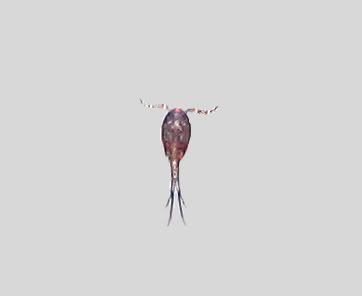
Copepods, Cyclops
Size: 0,1 - 0,2 cm, 0.04 - 0.1 inches
Copepods are small and funny looking one eyed crustaceans. They usually move around the tank glass and other surfaces, usually with one short leap at a time. Harmless, cute, there's lots of different coloured species. Females carry 2 egg pouches on their tail.
Control - Complete eradication is all but impossible. Proper aquarium maintenance and filtration will keep their numbers down enough to be unapparent. Providing a good current, even without filtration, will also keep the Cyclops in check.
Notes - Cyclops are generally harmless to all but the tiniest of fish fry. (Guppy and Cichlid fry need not worry.) In fact, Cyclops are an excellent "first food" for those young fish capable of catching them and consuming them.
As long as the tank is well maintained, Cyclops pose no danger.
Water Fleas, Daphnia
Size: 0,1 - 0,5 cm, 0.04 - 1/4 inches
Water fleas are usually used as fish food. They are tiny crustaceans and are easily recognized of their jerky vertical "swimming". They are completely harmless and really interesting creatures. I call them fat, sad reindeers (well, they look like it ).
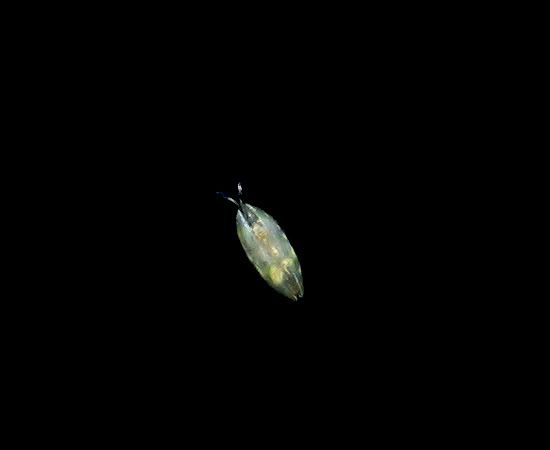
Seed Shrimp, Ostracoda
Size: 0,1 - 0,2 cm, 0.04 - 0.1 inches
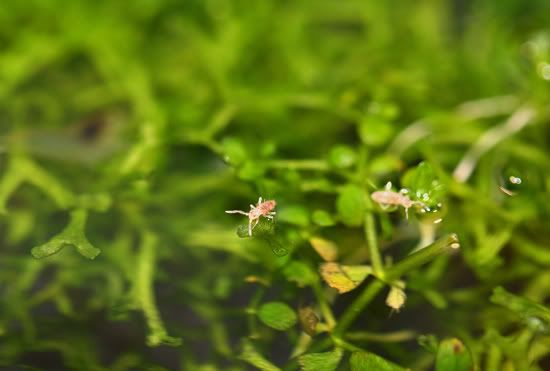
Seed shrimp are tiny seed shaped crustaceans. They are usually a bit bigger than Copepods. They move in a same fashion as Copepods, eating all kinds of nice things from the glass/plant/etc. surfaces and you can see them walking inside the substrate too. Sometimes they swim in open water looking like drunken bees. Here's a really young CRS baby looking at a seed shrimp. Really cute, harmless.
Control - Complete eradication is often unsuccessful, except for larger species, which seem more fragile. Regular aquarium maintenance and proper filtration usually keep the populations down to unapparent levels.
Because of their structure, Ostracods are extremely resilient against toxins. By closing the two shells, they can survive extended amounts of time in the presence of medications and pesticides. Even if they die, the shells serve to protect the unborn young until conditions are right again.
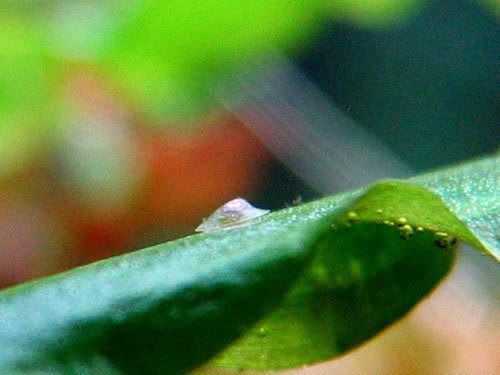
Freshwater Limpet - Acroloxus lacustris
Size: 0,1 - 0,8 cm ; 0.04 - 0.3 inches
Since freshwater limpets, Acroloxus lacustris, are so small and also move really slowly, it might be hard to identify them as snails. They are small and can't do much damage to plants, but since they are small, it's impossible to find and remove eggs and the baby snails. Harmless.
Something that looks a bit similar are Nerite eggs. They are singular, white, hard, round or oval shaped and about 1 - 2 mm in diameter.
Tubifex
Size: 2 - 5 cm, 3/4 - 2 inches
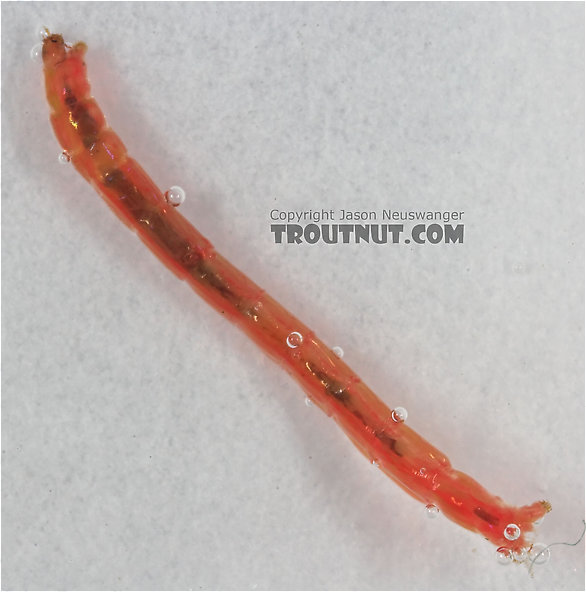
Red, yummy worms (used as fish food too) which live inside the substrate. If disturbed and dig up, they will form a ball, if left alone, they will gather pieces of sand/gravel around their body forming a sort of tube where they live in and they'll stick their head out of the substrate looking like red hairgrass. If there's lots of them, the substrate is too dirty and might be good idea to do something about it. Only a few Tubifex in the substrate isn't anything to worry about though. They are harmless.
Control - Only manual removal or being eaten by a fish can be recommended.
Notes - Unless deliberately added to an aquarium, large Annelids such as earthworms are rarely found in aquaria. Aquatic species can survive for quite some time in the gravel. Terrestrial species usually die within a day. Even a single larger dead worm can cause severe disruption to the water quality of the tank. Unless eaten, they should be immediately removed before they die or burrow into the ground. Their use as a fish food is acceptable as long the worms do not manage to escape into the substrate.
Nematodes
Size: 0,1 - 0,3 cm, max. 0.1 inches
Nematodes are small, thin, white/transparent free-living roundworms and the "swim" moving themselves in a wave like pattern (well, forming an S shape). If disturbed, they will swim around wriggling briskly. You can find them from the substrate and they are the ones that might appear from the filter when you turn it on. These ones are harmless, but as with any other "pest", if there's too many of them, you are either overfeeding or just not keeping the tank clean enough of debris, decaying plant matter.
Control - Proper tank maintenance (water changes, vacuuming the substrate, avoid excessive feeding) will keep the numbers down to unnoticeable levels. Copper treatments are effective, but should be used with caution. Nematodes are eagerly eaten by small fry and shrimp.
Notes - Most often, when an aquarist sees a Nematode, it is a simple scavenger, and of no harm to fish or plants. However, parasitic species exist. The general rule is if the fish and plants appear healthy, the worms are harmless.
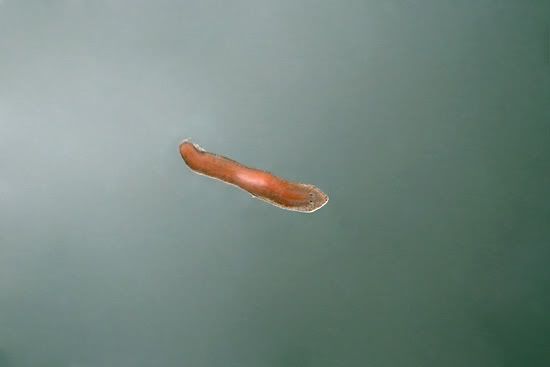
Planaria, flatworms
Size: 0,3 - 1 cm, 0.1 - 3/8 inches
Non-parasitic flatworms. Crossed-eyed grossness, just pure yucky! The only small creature I dislike (I get shivers down my spine even thinking about them). If you split it, it will regenerate and you will end up having 2 planaria. There seems to be several different colours in the common ones found in aquariums, transparent, white, brown and red. There's actually nothing really horrible about them, but they can bother small shrimp and snails and might eat fish/snail eggs.
They love shrimp pellets, pieces of meat, dead fish/shrimp and they will also eat small live creatures if they can catch them. They move on the surfaces, even under the water surface and are most active by night. If disturbed, they will retract themselves (shorter and wider), let go and drop down to the bottom.
Hydra
Size: 0,3 - 1,5 cm, 0.1 - 1/2 inches
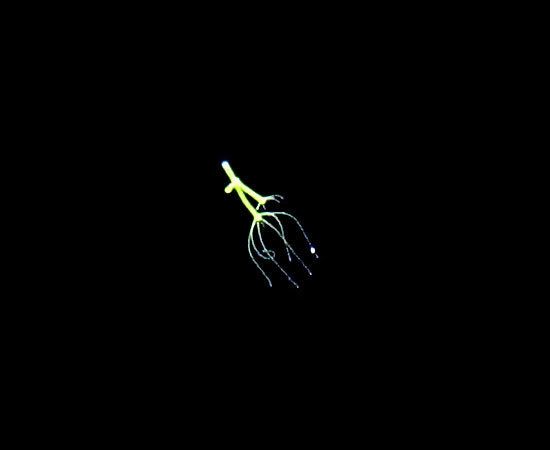
Hydra are beautiful, but a wee bit annoying creatures. They spend their life attached to surfaces (plants, glass, filter, decoration), they can move a bit, but usually don't have the need to do that. If disturbed, they will retract their tentacles and body to small buds. They catch small creatures (copepods, Daphnia etc.) with their tentacles which can sting, making it easier for them to haul the pray in to their mouth opening. They pose no threat to adult fish, shrimp or snails (might cause some irritation if they touch the Hydra), but newborn fish and shrimp fry are in danger.
Control - (Use at your own risk) Attach a wire to each pole of a 9 volt battery. Place the ends of the wires into the tank water, as far apart as possible. If the setup is working correctly, a fine stream of bubbles should be seen from one of the wires. The Hydra will start falling after about 20 minutes. The treatment should go no longer than 3 hours, keeping an eye on conditions the whole time. A daily 50% water change for 3 days is recommended since Copper leaches into the tank via one of the wires
Bryozoa, moss animals
Size: individual creatures are only a few millimetres long, the colony can be tens of centimetres long
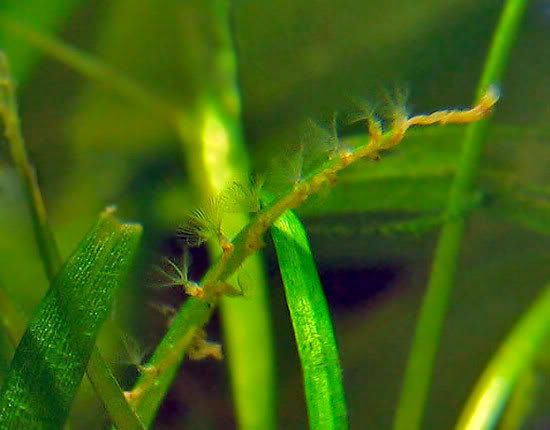
Bryozoans are interesting colonial creatures. They look a bit like corals with the hard skeleton structure of the colony. The individual creatures, zooids, are inside their own small part of the colony and they eat small particles (phytoplankton, zooplankton) floating in the water by guiding them (and water) towards their mouth opening with the fan like tentacles. If disturbed, the zooids will retract their tentacles inside the colony walls. They are harmless and really interesting.
Springtails, Collembola
Size: 0,1 - 0,3 cm, 0.04 - 0.1 inches
Springtails are cool hexapods. They are used as live food for fish that eat from the surface, for example small Betta species and labyrinth fishes. You can find them more often from soil or leaf litter than from the water surface, but once in a while they will appear on the floating aquarium plants. If disturbed, they will spring to safety releasing their "spring" (furcula) that's normally bent under their body. They can jump surprisingly far (several centimeters). Harmless and cute.
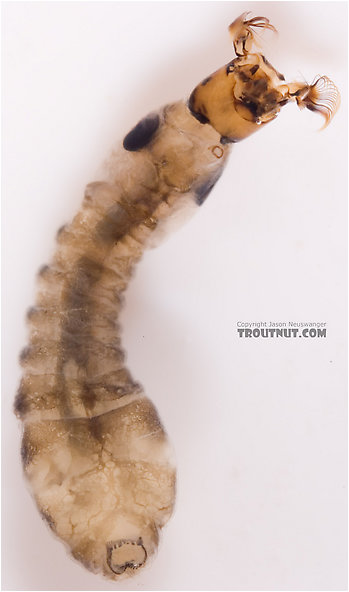
Mosquito larvae
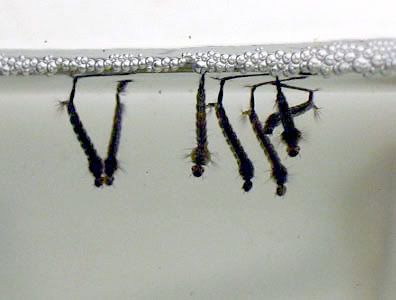
Mosquitoes will tend to lay their eggs on water surfaces which are still. Try to have some water movement at the surface for prevention of eggs laying there. One can also have some fishes in the aquarium, the fishes will find them a wonderful meal.


Reply With Quote


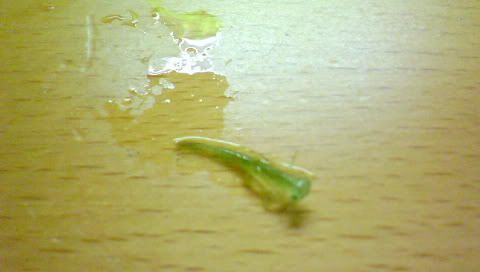
, what is it? It's less than 1cm long, smaller than my cherries.

looking picture posted by ranmasatome.


Bookmarks