


 Reply With Quote

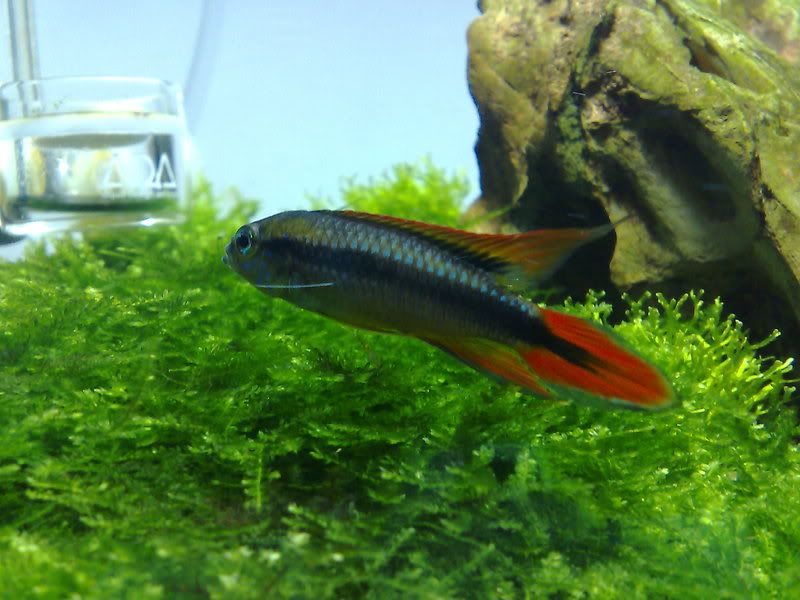
Its most probably a farm bred Agassizii variant... is it labelled as Double Red or Super Red?




 Growing old with this forum.. :)




now.. which river does my apisto belong to?
Last edited by benny; 25th Nov 2007 at 16:25.
Adoketa, Breitbinden, Paciquamis, Diplotaenia, Elizabethae, Mendezi, Inka, Agassizi, L046, L066, Crystal Red Shrimps
Its most probably a farm bred Agassizii variant... is it labelled as Double Red or Super Red?
Aquatic Dreams
Custom Made Aquarium Tanks, Cabinets & Stands
Contact Us: [email protected]
Website: http://www.aquaticdreams.com.sg
FaceBook: https://www.facebook.com/aquaticdreamsg/
knowing c328, it was probably just labelled "agassizii"
Then it should be the normal farm bred agassizii...
Aquatic Dreams
Custom Made Aquarium Tanks, Cabinets & Stands
Contact Us: [email protected]
Website: http://www.aquaticdreams.com.sg
FaceBook: https://www.facebook.com/aquaticdreamsg/
Instead of specifically highlighting the bred specimen (which we all know), does any one here knows the range in which this species is collected from?
I've split out marle's post because this is a very interesting question, which will explain why this species goes from S$4 each to S$480 per pair.
Cheers,
I have dwarf cichlids in my tanks! Do you?
Growing old with this forum.. :)
From what i gathered..
Distribution:
South America: Amazon River basin, along Amazon-Solimões River from Peru through Brazil to the Capim River basin.
Any thoughts why some are so expensive while some are not?
Is it due to the rarity factor?
Adoketa, Breitbinden, Paciquamis, Diplotaenia, Elizabethae, Mendezi, Inka, Agassizi, L046, L066, Crystal Red Shrimps
A. agassiziis are commonly found throughout the Amazonas. Diff. locality could produce differing color variants. Prices of specimens are largely determined by locality and availability, whether they're commercially bred or wild collected. Origins play a part in pricing too.
Generally most wild specimens are now from Peruvian exporters, though Brazilian exports are more beautiful (Due to locality) and costs more. Commercially bred German stocks are also costly.
Specimens like the common man-made 'Double Reds' are commercially bred and prices remain stable. Whereas wild specimens like the A. agassizii 'Tefe' are likely to fetch 10 times more.
 Posting Permissions


Bookmarks