


 Reply With Quote

Yes its normal that the female becomes more aggressive during breeding time. Whether to remove the male would depend. My male agassizii was killed by the female during breeding, so do look out for signs of injuries on the male.





I got a pair of apisto yesterday evening. The female was already quite ‘full’ as I have noticed in the LFS.
Last night, both male and female was quite cosy together, and I could see them swimming along the driftwood.
This morning, both refused to come out. I notice the female was occupying a hole in the driftwood. She would leave for a while and promptly return to it.
But I couldn’t fine the male until I caught sight of the female chasing it ???
My guess is the female may have laid eggs. Wonder if it had allow the male to fertilized the eggs?
I need some advice.
Is it usually the female that does the brooding?
Is it normal for it to chase away the male?
Should I remove the male (tank is 2’’ x 1.5”)?
Assuming that if there are eggs and it is fertilized, will the male be a threat to the fries subsequently?
Thanks
Nicholas

Yes its normal that the female becomes more aggressive during breeding time. Whether to remove the male would depend. My male agassizii was killed by the female during breeding, so do look out for signs of injuries on the male.
The female is the one who looks after the eggs and fry...during breeding time, she'll turn aggressive on the male and do her best to chase him away (sometimes the male is ultra aggressive and she doesn't succeed, then she'll eat the eggs). Don't worry about her allowing the male to fertilize the eggs...if the eggs were not fertilized, she wouldn't be so protective.
I would recommend removing the male, not just to prevent him from being killed or his fins from being torn by the female, but as you have noted, he will be a threat to the fries in future. He may want to breed again after they hatch and harass the female so much that she ends up eating the fry. However, there have been cases whereby the male helps the female to look after the brood, though such cases are few and far between.
You can remove any other fisehs you might have in the tank as well to reduce the threat. Otocinclus would be fine in the tank. But do so with as little disturbances to the female as possible.
Hi Guys
Thanks for the prompt reply, that really helps.
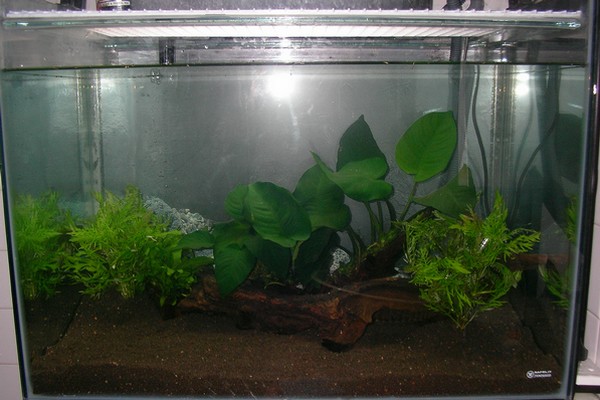
I will keep a look out, my tank is relatively big for a pair of apisto. Its 24” x 16” x 16”.
Has quite a bit of driftwood and plants, so I am pretty sure the male will have enough places to hid.
Probably will have to put in one or two more caves just in case I need to trap the male.
Thanks.
Nicholas
What is the typical numbers of days need for the eggs to hatch and fries become free swimming?
I do not have a heater in my tank.
There is no need for a heater. It would be best to remove the male if you have another tank though.
7-9 days is the norm from hatching to free swimming
it's about 4 days to get to wrigger stage and another 4 days for the wriggers to free swim...give or take 1 day or so =)
Thanks. Did you remove the male in your case?Originally Posted by illumnae

To take out the male in my tank would be very difficult.
Mine happens to be A. Elizabethae as well, an the male is about 1cm bigger.
Last edited by Quixotic; 29th Nov 2007 at 12:48. Reason: SMS lingo: 'u'
my male is almost double the size of the female =) i haven't gotten my elizabethae successfully past wriggler stage yet, but it could be because i haven't removed the male in the past 3 spawnings.
for my bitaeniata pair, i get best results when i remove the male, otherwise the male will harass the female into eating her spawn
looks like I might need to set a trap for the male then.
don't stress the male out too much...you don't want to sacrifice the male for the fry

 Quality Apistogramma through Line Breeding

Hi nicktc;
Are you using ADA Africana??What's the ph of your tank at the moment??
By the way..I have seen male Apistogramma Elizabethae Male caring for the brood..So based on your tank size..It's should be a problem to leave the male togather...
Regards
Dimas aka Milk
I am using ADA amazona II. Did measure the ph. do it later tonight.
Last edited by Quixotic; 29th Nov 2007 at 20:16. Reason: Remove immediate quote
Quality Apistogramma through Line Breeding
Humm....If you are using ADA Amazona II... The Ph of the tank should be in the range of PH 6~6.5. Base on my few experience of breeding Apistogramma Elizabethae...I'm actually sorry to tell you....Even if the female lays eggs...The eggs might not hatch...And according to Romer's Atlas 1..Apistogramma Elizabethae required PH level of 4.5~5 to have the eggs hatched.
Regards
Dimas aka Milk
Last edited by Quixotic; 29th Nov 2007 at 20:16. Reason: Remove immediate quote
Thanks for the pointer
Just to add on what Milk has said,
You would need to used Sera Peat to bring the PH to 4.5 - 5
Nicholas
Newbie en el cichlid enano
Quality Apistogramma through Line Breeding
Wow Nick....LIke that all secret out aready!!!!I was thinking of Pm him to tell him or give him some link to read through the forum!!!!
Sigh....Though wil be better to learn/search for the information by the user himself..Ha...ha...
Ps:It's just only a joke okie
Regards
Dimas aka Milk
Last edited by Quixotic; 29th Nov 2007 at 20:17. Reason: Remove immediate quote
You guys have really been a great help
OK, I share what I found quite useful for newbie like me.
http://www.fishtanksandponds.info/ar...rf-cichlid.htm
must spend more money liao.
Last edited by Quixotic; 29th Nov 2007 at 20:23. Reason: Merge posts/remove immediate quote
Quality Apistogramma through Line Breeding
If you are really interested to learn more about Apistogramma and dwraf Cichlid...I don't mind lending you the "bible" to kick-start your Dwraf Cichlid keeping..
But than...you got live near me first..
Don't worry about spending more money...When the Apistogramma Elizabethae breed and there's free swimming fries...All the money and efforts are well spend..By the way,a box of Sera peat can last you very long...Maybe say 3 or 4 changes??
Regards
Dimas aka Milk
Last edited by Quixotic; 29th Nov 2007 at 20:25. Reason: Merge posts
 Posting Permissions


Bookmarks