Advertisements
Aquatic Avenue Banner Tropica Shop Banner Fishy Business Banner
Page 1 of 2 12 LastLast
Results 1 to 20 of 34

Thread: Un-ID'ed Najas and Aponogeton species

  1. #1
    Join Date
    Aug 2002
    Location
    Choa Chu Kang, Singapore
    Posts
    3,148
    Feedback Score
    0
    Country
    Singapore

    Un-ID'ed Najas and Aponogeton species

    Advertisements
    Fresh n Marine aQuarium Banner

    Advertise here

    Advertise here
    Hi all,

    Did anyone tell ya that mid-week shopping for plants is so therapeutic? I ended up buying not only the Echinodorus but also some Aponogetons (need help with some of their names though).

    The E. 'Aflame' (that's what I'm told) is really nice and here's a closer look at the leaves before I planted them into my 'Echi-Tank'.


    E. 'Rubin', not the narrow-leafed cultivar, will hopefully grow and cover the water surface. Perhaps then, I can dispose of a tank cover.
    Note new submerged and older emersed leaf form and color. Here's a closer shot.

    I wanted E. uruguayensis with it's long green leaves but emersed-grown are all the farm has.


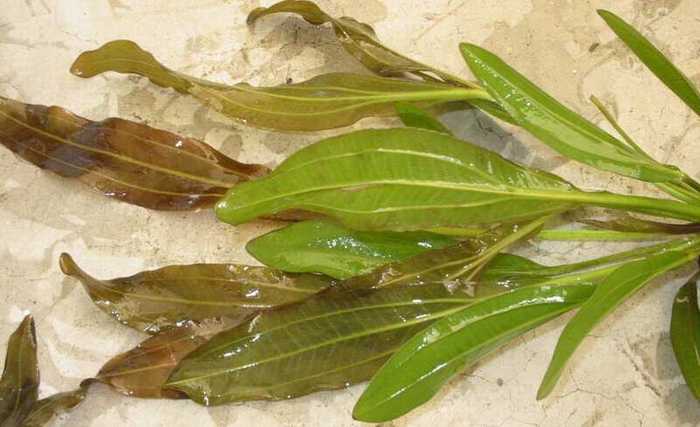
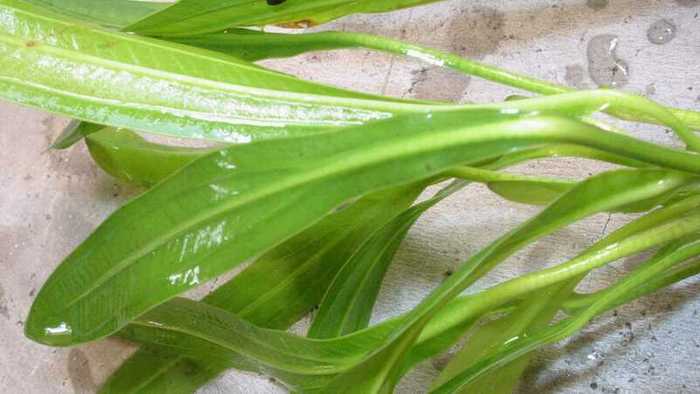
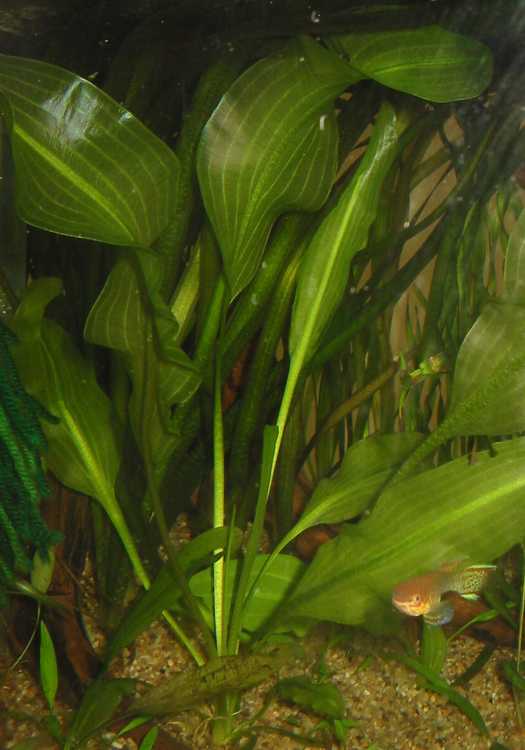
    Would appreciate some IDs for the 2 Aponogetons;


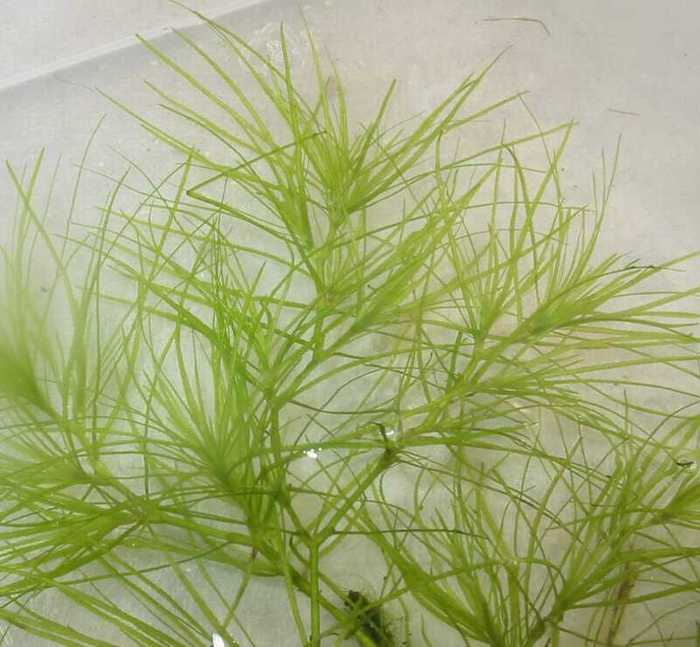
    My companion shopper (the friendly 'hobbit' :wink: ) was looking for Frogbits and while peeping into the cement 'tanks', I spotted an unusual plant and was later told it's a Najas species.

    Going through the Net, I gather that it might be Najas guadalupensis. I read of Najas being used as fine-leafed shelter for tiny fry and as 'start-up plants' but have never seen it in person. Anyone game to hazard a guess?
    I'm back & keeping 'em fingers wet,
    Ronnie Lee

  2. #2
    Join Date
    Feb 2004
    Location
    Alberta, Canada
    Posts
    182
    Feedback Score
    0
    I think the Aponogetons you have are A. longiplumulosus(left picture) and A. ulvaceus(right picture). Both are fairly easy to grow and both go through a dormancy period.

    I can never tell the difference between species of Najas. They are easy to grow but can be annoying to control! You might notice that the plant breaks apart easily which makes it difficult collecting all of it from a tank . They are very good for a bare tank for fry.
    -Mark Mendoza

  3. #3
    Join Date
    Aug 2002
    Location
    Choa Chu Kang, Singapore
    Posts
    3,148
    Feedback Score
    0
    Country
    Singapore
    Mark, I'm wondering how you arrive at the guesstimate that the left Aponogeton is longiplumulosus and not rigidifolius or crispus. They look awfully similar to me.

    Quote Originally Posted by Slaigar
    I can never tell the difference between species of Najas. They are easy to grow but can be annoying to control! You might notice that the plant breaks apart easily which makes it difficult collecting all of it from a tank . They are very good for a bare tank for fry.
    The question remains whether what I have are Najas or some other plants. Yes, I find them quite brittle and from what I've read, it's quite a rampant weed (hence local distribution will be limited to responsible hobbyists who don't dump plants into waterways!)

    I was considering using Najas as startup plant to absorb leached nutrients but only if it doesn't 'melt' like hornwort in new water. In your experience, how does your Najas react to big water change or medication?
    I'm back & keeping 'em fingers wet,
    Ronnie Lee

  4. #4
    Join Date
    Feb 2004
    Posts
    651
    Feedback Score
    0

    najas

    Ronnie, if I may butt in here,
    The najas pictured is not guadalupensis but a longer-leafed variety I've
    never seen. Guadalupensis likes medium-hard to hard water: goes to a
    lighter translucent green mush in soft (low TDS) water like I had in Maine. Very nice varietal of najas, where did you get it? I'd add a little equilibrium
    (Seachem) if available, and if SG water is soft and acidic. Warm temps
    above 85F tend to turn it to mush, too, just like C. demersum. Tropical
    hornwort, C. submersum, like I see in KL's pictures is more tolerant of
    higher temps.

    Bill
    farang9

  5. #5
    Join Date
    Dec 2001
    Location
    Duck pond
    Posts
    2,654
    Feedback Score
    0
    Images
    84
    Country
    Singapore
    Ron,

    At least one Najas species (N. indica) is native to Singapore. But they are really quite difficult to tell apart, and growth forms may differ depending on lighting and water conditions. They are quite brittle, but given ample light (CO2 helps but is not so vital), they branch freely into a nice, fragile looking fan of stems. But like hornwort, they seem quite sensitive to additives though (i mean those used to treat diseases, not fertilisers). For start-up soaker plants, i would go for the Sumatran fern, Hygrophila polysperma/difformis or floaters.

  6. #6
    Join Date
    Feb 2004
    Location
    Alberta, Canada
    Posts
    182
    Feedback Score
    0
    I can say the plant you have is definitely a species of Najas. I have treated mine pretty badly and it seems to have little affect to its growth: including tossing it from high ph & hardness to low ph & hardness and even with a few medications. However, I am unaware of its tolerance of salt.

    A. rigidifolius has a rhyzome and not a bulb. It's growth rate is also slower when compared to other Aponogeton species. In my experience, A. crispus has delicate leaves. The leaves in the left picture look very fleshy and lack that "crisp"* look, please correct me if I am wrong. I have never kept A. longiplumolosus but I always imagined it to look like Cryptocoryne crispatula var. balansae

    "Crisp"*: Hard to describe, so here's a picture!
    http://www.akvariumas.lt/augalai/apo...rispus_big.jpg
    A. crispus is a variable plant and usually I can't tell the difference between it and A. undulata or a hybrid unless it flowers. But the impression the plant left on me was as if the leaves were unevenly burnt with edges undulated and sometimes "pointy".
    -Mark Mendoza

  7. #7
    Join Date
    Aug 2002
    Location
    Choa Chu Kang, Singapore
    Posts
    3,148
    Feedback Score
    0
    Country
    Singapore

    Re: najas

    Bill, I nearly missed this Najas? because of the fine leaves but it does look nice. I had a tough time identifying it from the Net and guadalupensis was the closest visual match. Will experiment with a small section, together with hornwort, and see which melts to mush.

    Budak, I'm not sure about local Najas species but these do have a place in my fishkeeping/breeding practices. For now, I have a small piece of Water sprite in the Echi-Tank, not so much as absorber but to compare it's growth from other tanks.
    I'm back & keeping 'em fingers wet,
    Ronnie Lee

  8. #8
    Join Date
    Feb 2004
    Location
    Alberta, Canada
    Posts
    182
    Feedback Score
    0
    Taking a second look at that, I am thinking the left Aponogeton is actually Cryptocoryne crisputala. I just noticed in the picture that is no bulb on the plant. See if you can take another picture when you have some free time.

    Najas indica is slow growing plant according to Kasselmann and has no special requirements other than a temperature over 22 degrees Celsius. The picture in the book also has long leaves just like the Najas species that you have. It looks cool and I would not mind it in my tank.

    Ron,
    If you need any pictures, don't hesitate to ask. I can scan them from Kasselmann's book and send them to you.
    -Mark Mendoza

  9. #9
    Join Date
    Aug 2002
    Location
    Choa Chu Kang, Singapore
    Posts
    3,148
    Feedback Score
    0
    Country
    Singapore
    Quote Originally Posted by Slaigar
    Taking a second look at that, I am thinking the left Aponogeton is actually Cryptocoryne crisputala. I just noticed in the picture that is no bulb on the plant. See if you can take another picture when you have some free time.
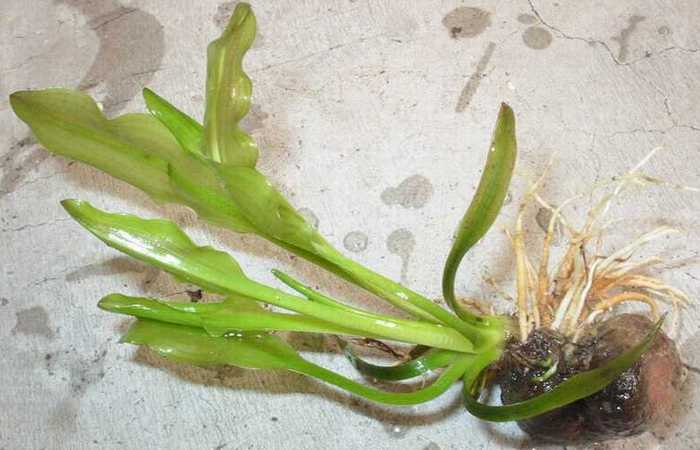
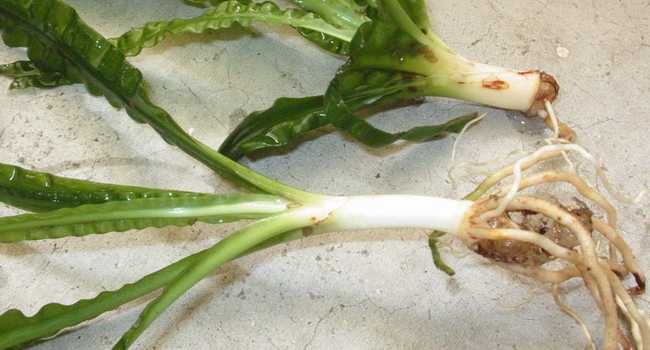
    Mark, will this pic help? I checked... there ain't no (bulb )


    Looks like I missed big time
    I'm back & keeping 'em fingers wet,
    Ronnie Lee

  10. #10
    Join Date
    Dec 2001
    Location
    Duck pond
    Posts
    2,654
    Feedback Score
    0
    Images
    84
    Country
    Singapore
    I think it's a Crinum, probably a form of Crinum natans. Aponogetons lack the pale stemmy part above the bulb.

  11. #11

    Re: Un-ID'ed Najas and Aponogeton species

    Quote Originally Posted by RonWill
    Going through the Net, I gather that it might be Najas guadalupensis.
    It is for sure not Najas guadalupensis which is less bushy compare to what you have.

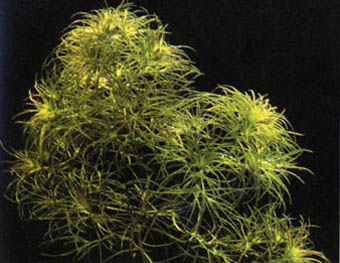
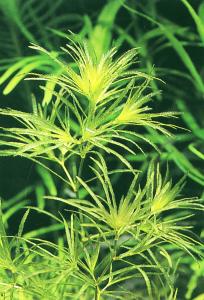
    I was looking at Najas indica vs. Najas sp. "broad leaf" and I will put my money on Najas sp., by looking at your picture.

    Najas indica - notice how leaves lean down.


    Najas sp. "broad leaf"

  12. #12
    Join Date
    Sep 2003
    Location
    Singapore, Singapore
    Posts
    318
    Feedback Score
    0
    Country
    Singapore
    Hi,

    I have grown Najas Indica in my tank before and they are quite tolerant. Brittle, prickly and red. Hard to scape but sure is an interesting plant to grow. They seems to be quite a tolerant plant. They survived even when I cannot stop my hand from plunging into the water and shifting the plant around during that time

    Cheers
    Vincent

  13. #13
    Join Date
    Aug 2003
    Location
    Singapore
    Posts
    269
    Feedback Score
    0
    Country
    Singapore
    It looks like Cryptocoryne crispatula var. balansae to me. Not to be mistaken with cryptocoryne crispatula var. crispatula that has narrower leaves (about 1cm wide), are not so wavy and will turn brownish in good light. Balansae should remain green.

  14. #14
    Join Date
    Aug 2002
    Location
    Choa Chu Kang, Singapore
    Posts
    3,148
    Feedback Score
    0
    Country
    Singapore
    Vic, I've killed enough C. crispatula var. balansae to know that what I have isn't it. The balansae's stem isn't as thick, nor with fleshy green leaves. Brownish tainted leaves sprout from rhizomes/tubers like what I have growing emersed.

    It's beginning to look alot like Crinum natans to me. Could the bulb have been removed/re-hibernated once the plant takes root? (I know Barclaya longifolia can be propagated this way) Compare the image of the shorter plant (in my previous post), with the Crinum link.
    I'm back & keeping 'em fingers wet,
    Ronnie Lee

  15. #15
    Join Date
    Feb 2004
    Location
    Alberta, Canada
    Posts
    182
    Feedback Score
    0
    I have not kept any Crinum species except C. thaianum but the plant could possibly be C. natans "crispus" or C. aquatica (are these synonyms?). Hopefully Jay Luto visits this thread and comments on it. If it is a Crinum species, the bulb shape may just forming.
    -Mark Mendoza

  16. #16
    Join Date
    Jun 2003
    Location
    Yew Tee
    Posts
    377
    Feedback Score
    0
    Country
    Singapore
    Hi Ronnie!

    It is Crinum Natans. So far my experience with Crinum species is that baby plantlets will grow from the side of the motherplant bulb. Just unpluck them and replant. The guys at Teo's told me by trimming the tips of the leaves of C Calamistratum everyday will spur the production of plantlets. It may work for the C Natans as well.

    Cheers!

    Kar Hwee

  17. #17
    Join Date
    Aug 2002
    Location
    Choa Chu Kang, Singapore
    Posts
    3,148
    Feedback Score
    0
    Country
    Singapore
    Hi Kar Hwee,
    I planted the Crinum Natans together with the un-ID'ed Aponogeton but growth is slow. However, the Aponogeton (ulvaceus or crispus?) was about 4inches on July 13th and has breached 12inches on the 20th (that's only a week!) I'm dumbfounded by the growth-rate, especially when the tank is running a UGF, no base fert and no CO2.

    4inch Aponogeton, bought 040713

    Growth spurt to 12inches as on 040720. Fp. gardneri N'Sukka at bottom right is about 1.5inches.

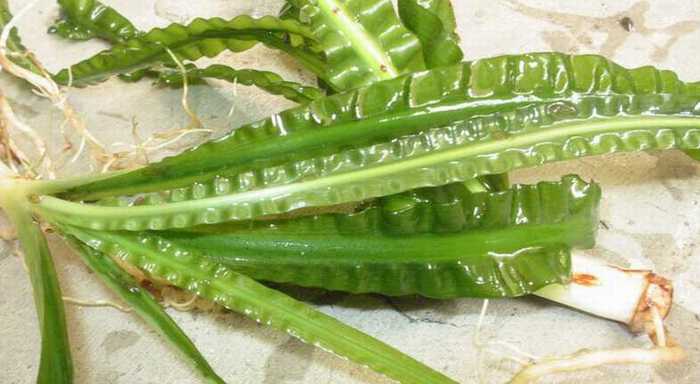
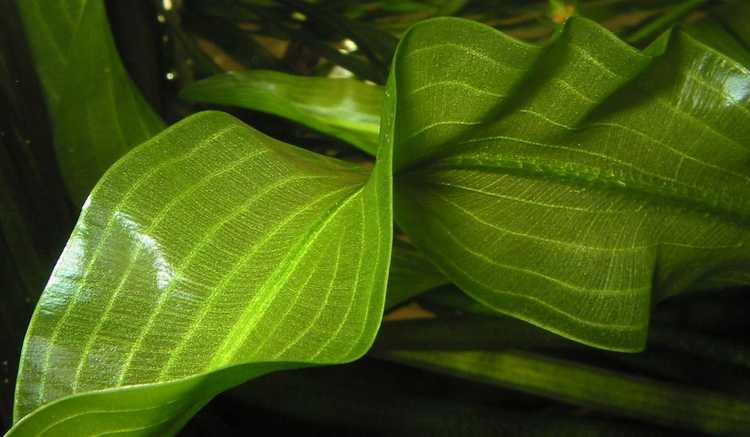
    Closeup of the Aponogeton leaf-blade.

    So is it a ulvaceus or crispus?

    Quote Originally Posted by kadios
    The guys at Teo's told me by trimming the tips of the leaves of C Calamistratum everyday will spur the production of plantlets. It may work for the C Natans as well
    Hmm... this is interesting. I bought 2 Crinum calamistratum last Sunday and they're still floating in the 4footer. Will snip one of them to see if plantlets really do appear.
    I'm back & keeping 'em fingers wet,
    Ronnie Lee

  18. #18
    Join Date
    Feb 2004
    Location
    Alberta, Canada
    Posts
    182
    Feedback Score
    0
    I am sticking with that it is A. ulvaceus. It looks very similar to one that I have(before I moved it and almost killed it!) with its semi-transparent leaves. Mine was quite delicate and frequently had holes in it from my loaches. A. crispus has a cylindrical tuber and the one in your picture looks like a sphere. I can get a picture of an A. crispus tuber if needed.
    -Mark Mendoza

  19. #19
    Join Date
    Aug 2002
    Location
    Choa Chu Kang, Singapore
    Posts
    3,148
    Feedback Score
    0
    Country
    Singapore
    Mark, I'm no plant-person and will go with what you guys decide. My goal is just nice, healthy plants :wink:

    It would be nice though, to know why there's a growth spurt. If the causes can be replicated, I'd be game to try it with other setups.
    I'm back & keeping 'em fingers wet,
    Ronnie Lee

  20. #20
    Join Date
    Jan 2003
    Location
    Haig Road, Singapore
    Posts
    468
    Feedback Score
    0
    Country
    Singapore
    Quote Originally Posted by RonWill
    It would be nice though, to know why there's a growth spurt.
    It's undergoing puberty

    On a serious note, it could be due to the water movement of your UGF?
    Zulkifli

Page 1 of 2 12 LastLast

Bookmarks

Posting Permissions

  • You may not post new threads
  • You may not post replies
  • You may not post attachments
  • You may not edit your posts
  •