Advertisements
Aquatic Avenue Banner Tropica Shop Banner Fishy Business Banner
Page 2 of 2 FirstFirst 12
Results 21 to 35 of 35

Thread: Kryptolebias marmoratus

  1. #21
    Join Date
    Mar 2004
    Location
    East-central California
    Posts
    926
    Feedback Score
    0
    Advertisements
    Fresh n Marine aQuarium Banner

    Advertise here

    Advertise here
    Quote Originally Posted by stormhawk
    Wright, in that case I think whatever is generally accepted should be the norm. As with Costa's work, I feel that the splitting of Cynolebias into the myriad genera is justified but many of his other efforts at splitting Pterolebias into Aphyolebias, Micromoema and Moema are certainly mind-boggling just as it is with his revisions of the SAAs. Within Simpsonichthys itself he has assigned some populations of well-known species like flavicaudatus into new species like flagellatus.
    Unfortunately, we are suffering the consequences of what happens when the government offers a $1000 bounty for each new species published and a bigger one for each new genus. Starving ichthyologists are people, too. :-)

    "Gee I got one less lateral-line scale on this side than the other. Let's give it a new name and describe it. Kryptolebias imbalansadica is thus borne, and another bounty collected.

    Quote Originally Posted by stormhawk
    Oh yes, the "gardneri" complex is in dire need of revision indeed. I wonder if Huber would be the next ichthyologist to generate some controversy in scientific circles.

    But certainly speaking, most people should accept that the fish in question here in this topic is still the hermaphrodite Kryptolebias marmoratus. Even if others decide to call it Rivulus marmoratus it is still the same fish and a quirky species nonetheless. Oh yes, I saw them eggs at Ron's place earlier and I must say, they've got some large eggs. Odd thing is none of the buggers are hatching. Perhaps the old microworm trick plus the crazy chicken dance plus some violent shaking may just make them hatch.
    They do seem a bit slow developing to me. Maybe 3-4 weeks? If they fail, LMK and I'll send some more until we get it right.

    When available, I carefully keep the collection code/location with my fish and give them the newest label I think likely to stick. I'll change that if I want to enter them in an AKA sanctioned event, to the current KMI name, and let Bill figure it out for F&E Listings. YMMV.

    Have to go tear up a bunch of Cryptolebias labels and print some Kryptolebias ones to replace them.

    Wright
    01 760 872-3995
    805 Valley West Circle
    Bishop, CA 93514 USA

  2. #22
    Join Date
    Jul 2004
    Location
    Norway
    Posts
    116
    Feedback Score
    0
    What a mess I have worked with the hobby for 40 years, but I'm relative new in the Killis hobby, and to be honest, I do't understand the problem who make it necessry changing all the time name of the species, may be this is a part of the hobby?
    I've got an epiplatys species for some days ago, and it had 25 synonyms, and I think this changing is't profesonal. I also see that world wide the species has different names.
    I think some clear thinking people hve to "put the foot down" because I think the hobby suffering of this inconstant.

    perhaps I have wrong, but I have to say that it's difficult to have the full view over the Killis, and I think that's is a pity.
    It's nice that the fish don't understand all the name it has

    Regards
    Svein

  3. #23
    Join Date
    Mar 2004
    Location
    East-central California
    Posts
    926
    Feedback Score
    0
    Most of us who have been in the hobby for a while are careful to keep the collection code and location name with the fish, Svein. That simply never changes. It gets lost or spelled wrong, but it is not subject to the latest fads or the ICZN confusion.

    The taxonomy of small fishes was an approximate thing until the '50s and '60s. That was when the definition of species was found to be inadequate (live fertile offspring, ergo same species)

    Early identification had always been on the basis of fin ray counts, proportional numbers, scale counts and such external meristics. Scheel's early work with chromosomes showed that fish (from different locations) that looked identical and had matching meristics had different numbers of chromosomes. Oh, oh!

    Meanwhile anatomists, like Weitzman and Parenti were introducing osteology into the identification process. Subsequently, Nguyen, Collier and others have added DNA studies to the ID mix.

    All this has led to a lot of revision of the taxonomic classification of killifishes. Tetras and barbs and catfish have been going through similar processes as we go along, but may have lagged a bit as killifish got hit hard in the early '80s and '90s. Perenti's revival of the Fundulopanchax genus and splitting of Aphyosemions was a bit like what the SA fishes are going through right now. Talk about upset hobbyists! It has been 30 years or more, and some are still furious.

    It has taken many hobbyists years to give up calling some fish "Roloffia" and to admit that the Fundulopanchax are real. [See the Baensch Atlases to see what I mean. ]

    It has been easier in the AKA because they put a rigid stake in the ground and said KMI is the official name list until a new one comes out. While never really correct, it kept enough hobbyists talking the same language to make things a lot less confusing. [Most confusion now comes from those who refuse to accept any change after 1950. :wink:]

    Bottom line: Let the taxonomists and Brazilian legislature do their damndest, we will be OK if we do a good job of just keeping the collection code/location straight and don't release hybrids, deliberate or inadvertent.

    Wright
    01 760 872-3995
    805 Valley West Circle
    Bishop, CA 93514 USA

  4. #24
    Join Date
    Jul 2004
    Location
    Norway
    Posts
    116
    Feedback Score
    0
    Thank's a lot Wright, the explanation work well for me, but I hope that in some years alle hobbyis world wide can speak about the same fish with the same name
    Regards
    Svein

  5. #25
    Join Date
    Jul 2002
    Location
    Bukit Batok
    Posts
    8,790
    Feedback Score
    0
    Images
    9
    Country
    Singapore
    Wright, I'll let Ronnie inform you should the marmoratus not hatch.

    With regards to Roloffia, aren't the former species in Roloffia currently placed in Callopanchax and Scriptaphyosemion?
    Fish.. Simply Irresistable
    Back to Killies... slowly.

  6. #26
    Join Date
    Jul 2004
    Location
    Norway
    Posts
    116
    Feedback Score
    0
    With regards to Roloffia, aren't the former species in Roloffia currently placed in Callopanchax and Scriptaphyosemion?
    Yes that's right, and it's a pity, I miss Roloffia
    regards
    Svein

  7. #27
    Join Date
    Aug 2002
    Location
    Choa Chu Kang, Singapore
    Posts
    3,148
    Feedback Score
    0
    Country
    Singapore
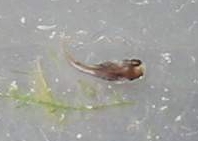
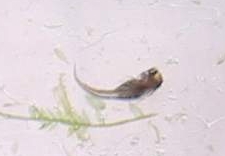
    Wright, one of the little buggers finally popped and I've transferred it to another container with conditioned java moss. Earlier, it had some difficulty getting out of it's shell and I was fearing the worse.

    Not very active at the moment and probably still absorbing it's egg-sac. Will update accordingly.


    Am I correct to label this as Kryptolebias marmoratus 'Dandriga Belize' Jan 2000?

    Zul, if you collect the fry any later, I'll have to send you a statement for 'baby sitting' services :wink:
    I'm back & keeping 'em fingers wet,
    Ronnie Lee

  8. #28
    Join Date
    Mar 2004
    Location
    East-central California
    Posts
    926
    Feedback Score
    0
    Quote Originally Posted by RonWill
    Am I correct to label this as Kryptolebias marmoratus 'Dandriga Belize' Jan 2000?
    Yep.

    Wright
    01 760 872-3995
    805 Valley West Circle
    Bishop, CA 93514 USA

  9. #29
    Join Date
    Aug 2002
    Location
    Choa Chu Kang, Singapore
    Posts
    3,148
    Feedback Score
    0
    Country
    Singapore
    Wright and Zul, I've forgotten to update...

    Two more mamoratus hatched this morning, looking better and fitter than the first (which is behaving like a slider). That makes 3, with one more viable egg to go.

    I've added some paramecium but doubt it'll do well with that salinity. Just to be safe, I served them some freshly hatched BBS as well.

    Wright, how long does it take before the fry are free-swimming?
    I'm back & keeping 'em fingers wet,
    Ronnie Lee

  10. #30
    Join Date
    Mar 2004
    Location
    East-central California
    Posts
    926
    Feedback Score
    0
    No Riv. is really free swimming. They pose with tail down and head elevated, all the time.

    Actually, mine have been swimming as soon as the tail is free from the chorion, usually. They do sit still a lot, compared to other kinds of killies. They take bbs right away, as there is little yolk left by then. Those are safest food as they stay alive indefinitely in the salty water.

    Wright
    01 760 872-3995
    805 Valley West Circle
    Bishop, CA 93514 USA

  11. #31
    Join Date
    Jan 2003
    Location
    Haig Road, Singapore
    Posts
    468
    Feedback Score
    0
    Country
    Singapore

    Re: Kryptolebias marmoratus

    I collected back the 3 little buggers from Ronnie on 30 August. Have been feeding them bbs and they are growing well - I hope. The biggest is about 1.5cm and they are around 3 weeks old.

    Quote Originally Posted by whuntley
    I wouldn't say hypersaline. The particular collection that you have, Dandriga Belize Jan. 2000, were originally collected in a rainforest in water that was very low tds (almost like distilled water, with no salt at all). While they tolerate, for brief periods, water up to seawater salinity, most are found in areas tempered by some fresh water.
    Wright,
    After re-reading the posts, I'm a bit confused. You mentioned that the original biotope has low tds but you are raising them in saltish water? How so?
    Zulkifli

  12. #32
    Join Date
    Mar 2004
    Location
    East-central California
    Posts
    926
    Feedback Score
    0
    I'm going on blind faith and a fund of info on marmoratus that may or may not be entirely valid.

    I received the report of low tds biotope from Bill Gallagher, who probably got it from Bob Goldstein, who got the originals from Bruce Turner.

    Believe what you want, my "females" are doing fine in salty water, of ill-defined strength, (no SG meter) so I just keep using it. I'd rather raise and "breed" them in fresh water, but cannot convince myself that it is likely to work.

    With any luck, yours are ready to produce eggs and you'll have them coming out your ears in a few months. When that happens, talk some poor soul into trying to reproduce them in fresh water, and we will all know.

    Wright
    01 760 872-3995
    805 Valley West Circle
    Bishop, CA 93514 USA

  13. #33
    Join Date
    Sep 2004
    Location
    USA
    Posts
    349
    Feedback Score
    0
    Wright: Do you happen to still be keeping these guys? I did some reading and they seem to be pretty interesting fish.
    ~Joseph

  14. #34
    Join Date
    Mar 2004
    Location
    East-central California
    Posts
    926
    Feedback Score
    0
    No, sorry.

    I gave the last of mine back to Howard Wu when he returned from his recent trip to OZ. I'm keeping her 5G tank empty of other fish for a few weeks, just to see if she left any uneaten eggs behind.

    When trying to collect eggs, Howard had a neat trick. You take a sheet of the "plastic canvas" used for stitchery, and cut it to a tight fit the length of a plastic shoebox. Cut the other direction a bit longer than the width of the shoebox, so it can be pushed down into a curve, with generous protected areas below it so eggs can be pushed through and not eaten. Like many other killies, these are, given the chance, crevice spawners.

    Many non-annuals leave most of their eggs up in or near the mop knot. I bet folks would find dramatic increase in production if they would build a floss-filled egg trap like we use for lampeyes. I have become convinced that many, if not most pupfish are really crevice spawners, too. I get good results with a loose wad of filter floss on the tank bottom.

    [The first line was the answer. The rest bloviation at its best. ]

    Wright
    01 760 872-3995
    805 Valley West Circle
    Bishop, CA 93514 USA

  15. #35
    Join Date
    Sep 2004
    Location
    USA
    Posts
    349
    Feedback Score
    0
    Thanks Wright for the info. If by luck fry pop up in that tank I may be interested in eggs sometime in the future.

    I remember someone on killitalk was planning to breed marmoratus to give them for free to schools etc. and to sell on killitalk, but forgot who it was.

    Yet another question.

    Do you happen to know how many fish(or...clones) compose the particular location you are keeping? I noticed that with one scientific study involving this fish the fish used were from clones given specific numbers. Seems too much of a hassle for hobbyist though?
    ~Joseph

Page 2 of 2 FirstFirst 12

Bookmarks

Posting Permissions

  • You may not post new threads
  • You may not post replies
  • You may not post attachments
  • You may not edit your posts
  •