



Advertisements
Aquatic Avenue Banner Tropica Shop Banner Fishy Business Banner
Page 2 of 2 FirstFirst 12
Results 21 to 38 of 38

Thread: Darn, ich outbreak in my planted tank!

  1. #21
    Join Date
    Nov 2002
    Location
    Pasir Ris, Singapore
    Posts
    312
    Feedback Score
    0
    Country
    Singapore
    Advertisements
    Fresh n Marine aQuarium Banner

    Advertise here

    Advertise here
    Quote Originally Posted by TyroneGenade
    0.05 ppm is very little... I normally go with 0.5 ppm (mg/L) which is then quite potent. It doesn't kill guppies at that concentration but may be bad news for Tetras and catfish.

    I would start at 0.05 and if it doesn't work then double the dose till you find a dose that works. Keep doing water changes!!!

    the higher the organic matter in your tank the more you will have to add to get an "effective" dose as organic matter adsorbs the dye.

    tt4n
    Tyrone,

    Yeah, the planted tank should have quite a fair bit of organic matter, but I think 0.5ppm is still way too high. It's the plants that I'm worried abt, or I've done what I did before and overdose my FMC a wee bit.

    So far, some of the fishes like the rams and the SAEs have been cleared of ich, but some of the pencils have got a spot or two on them. I think I'm going to dose one more round tonight, after lights off.

    Boon Yong,

    So, what's the active ingredient in the Interpet Anti-ich? What's the plants you've?

    Cheers,

    Kenny

  2. #22
    Join Date
    Aug 2004
    Location
    Cape Town, South Africa
    Posts
    887
    Feedback Score
    0
    High all

    I've done some looking and it seems that 5 ppm is way way WAY too strong for anything that isn't already dead to stand. 0.5 ppm is already a very strong dose and is probably the maximum dose one can give. I'm pretty sure of my 5 ppm though but I can't check the source (it is in Africa and I'm in Italy)... it is probably for something indestructable like Dambusia or channel catfish...

    0.05 is a good starting point and 0.5 ppm a good end point but one could probably press on in desperation.

    tt4n

  3. #23
    Join Date
    Nov 2002
    Location
    Pasir Ris, Singapore
    Posts
    312
    Feedback Score
    0
    Country
    Singapore
    Tyrone,

    0.1ppm is probably as high as I want to go, but I'm not desperate yet.

    Sera has come up with an 'improvement' over the Costapur, and is called the Costapur Plus.

    Costapur Plus contains abt 58.9ppm of formaldehyde, if I'm not wrong. This time round, the instruction is clearer, telling us to dose on every alternate days, at a dosage I can't remember as I just gleaned over the paper.

    Cheers,

    Kenny

  4. #24
    About a month ago my gf's brother's golfish tank was infected with ick.

    By the time we notice it, half of the goldfishs were already infected . A few of the goldfish were so stress that they banged and rubbed around until red sores were found on they bodies.

    I searched on the net and realised it was ick and went LFS to look for anti ick medicine. Got the most expensive type , those circular wafer type that dissolves in the water. By night when my gf reached home with the anti-ick , two of the goldfishs floated, but still breathing. I tell her to dump two tablets -as opposed the recommended one tablet for 10 Gallon.

    Thinking - "Desperate situation requires desperate measures."

    The next morning one goldfish went heaven , and a new goldfish floated. By the end of the night , the two goldfish still floated but breathing. The following morning , one goldfish recovered. The other goldfish continue to floated and endured for one more day before going to heaven too.

    5 of the small type tetra also die in the process. i suspect it may be is due to over-dosing of anti-ick.

    Four day laters the tank is free from ick. And the goldfish swims happily again.

    2 out of 10 goldfish KIA ....... "MISSION ACCOMPLISHED"

    Regards
    Kok Yong

  5. #25
    Join Date
    Aug 2004
    Location
    Cape Town, South Africa
    Posts
    887
    Feedback Score
    0
    Stay as far away from formaldehyde as you possibly can... why the stuff has not yet been banned I do not know...

  6. #26
    Join Date
    Jan 2002
    Location
    Seng Kang
    Posts
    366
    Feedback Score
    0
    Country
    Singapore
    Quote Originally Posted by hobbit6003
    Boon Yong,

    So, what's the active ingredient in the Interpet Anti-ich? What's the plants you've?
    No idea pal. Wish I knew.

    Variety of plants, including soft stem plants like tonina and luwidgia, not just the super hardy anubias. All were fine. No moss though, so can't comment on that.
    Cheers
    Boon Yong

  7. #27
    Join Date
    Nov 2002
    Location
    Pasir Ris, Singapore
    Posts
    312
    Feedback Score
    0
    Country
    Singapore
    Quote Originally Posted by TyroneGenade
    Stay as far away from formaldehyde as you possibly can... why the stuff has not yet been banned I do not know...
    Tyrone,

    The classic and standard prep for external parasitic infestation like ich contains formaldehyde, malachite green and methylene blue. This is referred to as FMC.

    Well, if formalin is toxic, then surely malachite green would deserve the ban too, since it is carcinogenic and can cause nephrotoxicity (kidney) and hepato toxicicty ( liver)?

    BTW, I got it wrong on the new prep by Sera, it is known as Costapur Improved, not Costapur Plus.

    Kenny

  8. #28
    Join Date
    Nov 2002
    Location
    Pasir Ris, Singapore
    Posts
    312
    Feedback Score
    0
    Country
    Singapore
    Quote Originally Posted by cheeboonyong
    Quote Originally Posted by hobbit6003
    Boon Yong,

    So, what's the active ingredient in the Interpet Anti-ich? What's the plants you've?
    No idea pal. Wish I knew.

    Variety of plants, including soft stem plants like tonina and luwidgia, not just the super hardy anubias. All were fine. No moss though, so can't comment on that.
    Boon Yong,

    Does it have any smell?

    So far, Costapur seems to be alright for the plants, they are photosynthesising as per normal, with the inference from the pearling I see.

    The situation on the ich is improving of course, the Rams and the SAE has recovered, and so too most of the infected pencils. There's a couple of new case though, the Apisto. borellis. These guys would have been first on the hit list, since they are the ones who are constantly being bullied with torn and tattered fins, wonder what took the ich so long to seek them out. Anyway, they're not serious, only a couple got hit and that too, just one spot each on the caudal fin.

    And I discover a potentially far worse plague.....RICCIA FLUITANS! Urgh, this must have come from the java moss I added recently!!!

    Kenny

  9. #29
    Join Date
    Aug 2002
    Location
    Choa Chu Kang, Singapore
    Posts
    3,148
    Feedback Score
    0
    Country
    Singapore
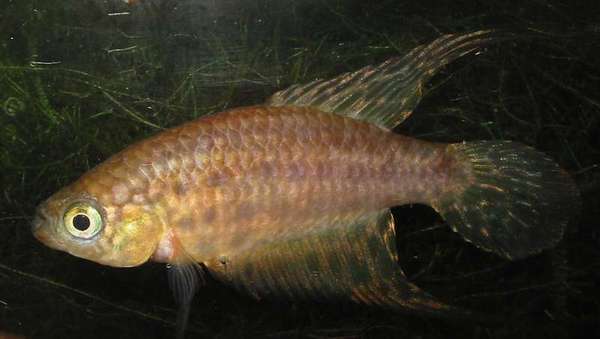
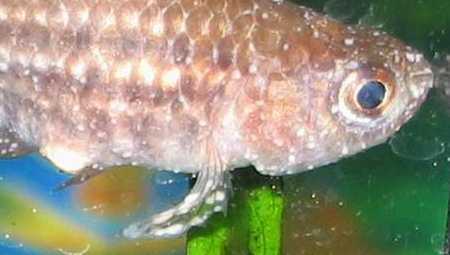
    For those who claims that ich don't kill, think again...

    If treatment is administered too late, it can turn a fine specimen from this...


    ... to this


    It spreads very rapidly and a few have succumbed. Two more is just hanging on, strange that Costapur didn't seem to have any effect.

    Kwek Leong, I recall Jian Yang handling over a group of sub-adult constanciae to you during one of our FSOMM (First Saturday Of Month Meet). I may lose all of mine and suggest a closer tab on those under your care.

    I have a retired trio but those are the original CONs and close to 2 years... which is so old for an annual that even Viagra won't help!
    I'm back & keeping 'em fingers wet,
    Ronnie Lee

  10. #30
    Join Date
    Nov 2002
    Location
    Pasir Ris, Singapore
    Posts
    312
    Feedback Score
    0
    Country
    Singapore
    Ron,

    Prognosis of each cases would differ with the severity of the individual case, even if the same treatment modality has been administered.

    For your case, it is definitely very severe, and besides having the the ich parasitizing on the fish directly, the fish can also suffer from secondary bacterial infection, and also respiratory failure, when the gills are also parasitized.

    In such cases, it would be wise to dose on the heavy side, and aerate the tank well. You may want to try Costapur Improved, which would have the more potent formaldehyde in it.

    What I did these few days, was to add 0.05ppm of malachite green everyday, and did 50% water change on the 3rd day and re-dose. Today is the 4th day, and all have recovered. But I'm not relaxing as yet, and will possibly do another 0.05ppm tonight, and then another waterchange on Saturday, my usual weekly water change day.

    For your case, you may want to double the dosage. Well, it is either the medication or the ich that's gonna do your fish in.

    Kenny

  11. #31
    Join Date
    Aug 2004
    Location
    Cape Town, South Africa
    Posts
    887
    Feedback Score
    0
    Take the infected fish and dip in salt water until it looks upset. Then out it into a clean tank. The whitespot will melt away and your fish should survive if it isn't already too late.

    24 g of salt per L should do the job.

    tt4n

  12. #32
    Join Date
    Aug 2002
    Location
    Choa Chu Kang, Singapore
    Posts
    3,148
    Feedback Score
    0
    Country
    Singapore
    Tyrone,
    The constanciae don't need no more meds... they've migrated to the 'big pond in the sky'.

    Guys,
    Before returning home from graveyard shift, I stopped over at the LFS to pick up a bag of daphnia. I was early and they've just opened their doors. Guess what? I saw whole tankful of neons and dwarf gourami floating, dead as can be! Another tankful of oranda goldfish were covered in spots, with a few more tankfuls of very stressed fish... fins all clamped and shimmering.

    The operator was cursing of course, saying that the new guy shouldn't have changed all the water. LFSs around my area have been experiencing problems with "something in the water" and have doubled their anti-chloramine dosage.

    I don't know about them but these days, my brine shrimp hatch rate is pathetic (yes, I scrubbed the bluddy hatchery, still using the same 'Red Sea' marine salt and from the same batch of BBS eggs, which previously yield good hatch rate).

    While chatting with a fellow forumer yesterday, he heard that even the robust arowana konked after water changes. I'll let him speak when he gets 'clearance'.

    ... and I'm told not to blame the water
    I'm back & keeping 'em fingers wet,
    Ronnie Lee

  13. #33
    Join Date
    Nov 2002
    Location
    Pasir Ris, Singapore
    Posts
    312
    Feedback Score
    0
    Country
    Singapore
    Well,

    I happened to be the forumer that Ron chat too last night.

    As I related my ich problem in my apparently healthy planted tank, which I attributed to detergent contamination, my vet friend just told me that one of his aro died 2 days after a substantial water change last week, the only sign that it showed before its demise was that of a respiratory distress, hanging near the water surface.

    This is not the first case I've heard for these past month. I was called upon to attend to a batch of LFS arowanas which was showing signs of deheiscence, tissue inflammation and possible secondary bacterial infection, just a couple of weeks ago. These fishes all had water change less than a week prior to the problem surfacing. Unfortunately, the owner did not for some strange reason, pre-treat the water before the water change. Thank God we managed to salvage most of them, barring 3.

    As some of you might know, I'm a moderator in Arofanatics, taking care of medical problems related to the arowanas. Well, I can tell you that these signs and symptoms are actually getting more prevalent these days, judging from the cases I get from the forum. Dr Fred Chua, the fish vet will tell you that he gets his fair share of such cases as well.

    Now, as I look at my own tank, it may not be the detergent after all, as I did perform 50-60% water change a couple of days prior to the ich outbreak, and one of the apistogramma is actually showing signs of deheiscence near the caudal peduncle and possible secondary bacterial infection. Fortunately, she is recovering well now, after I took her out and treated her with nifurpurinol.

    On the same day, I did perform a 20% water change to another 2 ft tank containing a pair of nanacara anomala, a South American dwarf cichlid. They spawned the following day, and strange enough, all the eggs turned bad within 2 days, all of the nearly 100 plus of them! I never had problem with them before, and the last 2 spawns they had, had yielded quite a number of frys in the community tank.

    Luckily, I did not perform water change to another of my 2ft containing a harem of apistogramma borelli, as I saw a couple of females brooding over some eggs. Today, I'm rewarded with 6 spawns in that tank!

    Hmm....we are suspecting the water, but whether it is chloramine or otherwise, we're not too sure....

    Peter, any 'hidden' biochemical stuff added at the water treatment plant, that you know of and would like to share with us?

    Cheers,

    Kenny[/i]

  14. #34
    Join Date
    Aug 2004
    Location
    Cape Town, South Africa
    Posts
    887
    Feedback Score
    0
    If your water company is adding new chemicals to the water the problem for the infections may already be in your tank in the form of bacterial biofilms. I read in the Chill-out corner that there has been an small outbreak of cholera. Well, Vibrio cholera is also fish pathogen causing dropsy etc... These bacteria live quite happily in biofilms with harmless bacteria never causing any trouble. But if you disturb the biofilm by example doing a water change with chloramine water or detergents the Vibro come free and start looking for a new home... and what is better than a nice juicy fish? Pseudomonas and Aeromonas also live in biofilms (far away from oxygen that makes them very unhappy campers) and can also cause inflamation etc...

    I'm willing to bet that chloraine also retards the fish's immune system giving the bacteria a much needed hand. Also, as white blood cells need O2 to do their work if the gills are damaged their activity is impaired. Stress of course also shuts down the immune system via the action of stress steroids like cortisol and corticosterone.

    Just some food for thought...

  15. #35
    Join Date
    Jul 2002
    Location
    Singapore
    Posts
    4,088
    Feedback Score
    0
    Country
    Singapore
    Kenny, not sure what the folks at the water department side are adding to treat the water but if you really feel that the water is the issue of all the problems, you might want to ask Ronnie about the email address of the executive chemist I gave to him or post the issue through PUBOne. They will get to you as soon as possible on the weekdays. I have no issues regarding the water and my recent water change is just 2 days ago (50%). Can't really tell what really is the issue but if you do regular large water changes and use anti-chloramine solutions, there shouldn't be any big issues. The issue only comes when you seldom do water changes and then suddenly one very large one...that might stress the fish out due to a sudden change in DOC and TDS.

    Regards
    Peter Gwee :wink:

  16. #36
    Join Date
    Nov 2002
    Location
    Pasir Ris, Singapore
    Posts
    312
    Feedback Score
    0
    Country
    Singapore
    Quote Originally Posted by PeterGwee
    Kenny, not sure what the folks at the water department side are adding to treat the water but if you really feel that the water is the issue of all the problems, you might want to ask Ronnie about the email address of the executive chemist I gave to him or post the issue through PUBOne. They will get to you as soon as possible on the weekdays. I have no issues regarding the water and my recent water change is just 2 days ago (50%). Can't really tell what really is the issue but if you do regular large water changes and use anti-chloramine solutions, there shouldn't be any big issues. The issue only comes when you seldom do water changes and then suddenly one very large one...that might stress the fish out due to a sudden change in DOC and TDS.

    Regards
    Peter Gwee :wink:
    Hi Peter,

    Sorry for my extremely late reply as I've just got too much work to catch up!

    Thanks for your referral, will ask Ron about it. Sheesh....just saw him a couple of days ago and I've forgotten.

    Well, I've always been doing a large partial water change religiously weekly, and this is the first time I'm getting this problem in 2 years. My arowana got this skin deheiscence before 3 yrs back, when the water in my area had a pH reading of 8-9. I'd have to presume that choramine was added then. The pH returned to noremal (7) nearly 2 yrs ago.

    As for TDS, it usually drops from about 270ppm to about 170ppm after water change, which I then promptly restore to about 240ppm with addition of a plethora of nutrients.

    So far, my plants are doing fine and the only algae growing are the green spots on java fern leaves being exposed to high light.

    Tom and you are absolutely right, who says a gentle surplus of nutrients will farm algae??? I was wrong to have thought otherwise.

    Oh yes, just attended a call of an arowana LFS over the weekend, and they have been hit by this phenomena too (slime deheiscence, tissue inflammation). Sadly, Fred and I were consulted a tad bit late, and the owner lost about $20,000 worth of asian aros. The rest, we were able to recover using Epsom salt (at 1g per litre), activated carbon and zeolite. The ones that had secondary bacterial infection were treated with Melafix. Those that died succumbed to severe secondary bacterial infection, as the owner did not know what to do.

    And my fishes have recovered too, hopefully I'd have a viable spawn from my good ol' nanacara pair.

    Cheers,

    Kenny

  17. #37
    Join Date
    Jul 2002
    Location
    Singapore
    Posts
    4,088
    Feedback Score
    0
    Country
    Singapore
    Quote Originally Posted by Kenny
    So far, my plants are doing fine and the only algae growing are the green spots on java fern leaves being exposed to high light.
    Likely to be a CO2/PO4 issue. Check and double check the pH/KH readings both in the am/pm times for a couple of days during the week. Make sure the CO2 is near or at 30ppm throughout the photoperiod. If you add 5-10ppm of errors from readings, your CO2 might not be that high in actual fact. Once the CO2 is checked out and you are sure it is not the issue, you might want to add a tad more PO4. I have crypts in the foreground that receive plenty of light yet I don't get spot algae unless my CO2 drop below 20ppm at anytime during the week.

    Quote Originally Posted by Kenny
    Tom and you are absolutely right, who says a gentle surplus of nutrients will farm algae??? I was wrong to have thought otherwise.
    All you get is a weed choked tank unless it is ammonia you are adding..

    Quote Originally Posted by Kenny
    Oh yes, just attended a call of an arowana LFS over the weekend, and they have been hit by this phenomena too (slime deheiscence, tissue inflammation). Sadly, Fred and I were consulted a tad bit late, and the owner lost about $20,000 worth of asian aros. The rest, we were able to recover using Epsom salt (at 1g per litre), activated carbon and zeolite. The ones that had secondary bacterial infection were treated with Melafix. Those that died succumbed to severe secondary bacterial infection, as the owner did not know what to do.
    I was wondering about the LFS that you mentioned in your area...Have they been around for long in the line or did they just got into the trade just to jump on some bandwagon kinda thing like the Luohan trend? Did they know it is a safer act to dose anti-chloramine solutions to the tank whenever they do a large water change? Are they adding loads of un-needed stuff to the tank? Generally, large water changes does more good than harm to fishes if done regularly like once or 2x a week and that they practice dosing of anti-chloramine solutions..(I am doubtful if many does that as that will increase their cost. This is just a guess though..). Arowanas creates loads of waste imo so you might want to look into the ammonia stress factor as well. Prevention is better than cure...A large filter or a sump is good for ammonia conversion to NO3 but nothing is better than water changes in my experience.

    Regards
    Peter Gwee :wink:

  18. #38
    Join Date
    Nov 2002
    Location
    Pasir Ris, Singapore
    Posts
    312
    Feedback Score
    0
    Country
    Singapore
    Hi Peter,

    Well, the symptom' appearance is too acute to be ammonia poisoning from waste buildup, usually symptoms appear hours after a substantial water change. They're quite consistent with having chloramine or other biomedical toxicity, which includes initially deheiscence of slime, and palor in the gill filaments. Secondary bacterial infection is the usual sequelae if the problem is not arrested.

    This have been occuring in various parts of the country for the past 2 years, and coincidentally, when Newater was introduced.

    Yes, it could be ammonia poisoning still, but the amine group could be a more possible and probable suspect than the waste. This is critically so since water around these troubled spots are usually buffered above 8.

    Oh yes, about my CO2 level, I think if all my readings are accurate, I should have more than 40ppm, with a kH of 3 and a pH of 6.3. The plants are all doing great, but my lighting is on the high side, having approx. 3.5WPG.

    Still, I'm happy with what I have, and now, I don;t even need to clean the glass for months!

    Cheers,

    Kenny

Page 2 of 2 FirstFirst 12

Bookmarks

Posting Permissions

  • You may not post new threads
  • You may not post replies
  • You may not post attachments
  • You may not edit your posts
  •