


 Reply With Quote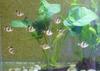
Ya. I got both types too when I bought 25 for $30. I was wondering why my Oto look different.







Sorry, are these 2 Otocinclus the same? Please see below picture 1 & 2
I got 6 Oto look like picture 2, and 1 Oto look like picture 1. Can they mix together?
or i have to buy more picture 1 type Oto to acompany the lonely fellow?
(1):
(2) :

Last edited by Quixotic; 26th Dec 2007 at 14:29. Reason: Formatting
一个相机走天涯..
Ya. I got both types too when I bought 25 for $30. I was wondering why my Oto look different.
i see. cause my look funny. the lonely one look yellowish brown in color . then the other 6 look silvery or gray in color. that why i asksome more look very lonely . don't mix with the 6 silvery gray in color type.
Last edited by Quixotic; 26th Dec 2007 at 14:30. Reason: SMS lingo: 'coz', 'y'
一个相机走天涯..
From what I read from www.otocinclus.com, a stressed out Oto may appear to have very light gray top with a thin stripe down the middle. With good care, clean water and lots of greens, the fish will turn a darker gray and sometimes even brown, and have a thick black stripe running through the middle of their bodies.
Does this explain why we have Otos with different look?
eh. not sure. if i'm not wrong. in Sg there are 2 to 3 type of Oto in the market
that why i want to ask , are they compactible . but i dont thing so. due to i watch them, all the silvery gray oto do shoal together sometime. but the lonely yellowish brown Oto don't , so that puzzle i'm
Last edited by Quixotic; 26th Dec 2007 at 14:31. Reason: SMS lingo: 'y', 'wan'
一个相机走天涯..
I see. Thanks. I didnt know there are few types of Otos available in Singapore. Have to pay more attention when I buy them the next time. I prefer the slim silvery Oto to the fat brown type.
This page has photos of several types:
http://www.planetcatfish.com/catelog...nus_id=49#1083
Can anyone with some experience indicate which are available here in Singapore? The ones I have look very much like the O. hoppei or the O. huaorani. But the differences in marking look very marginal to me. Looks like the O. affinis or the O. vittatus except the dark lateral line ends in a blob or a vertical dash. Much like the one in photo 2.
thanks for the webby.
think my photo (2) :Otocinclus macrospilus look very alike
(1) : Otocinclus vestitus not very sure
wa. now need to buy more picc (1) , to acompany the lonely one
Last edited by Quixotic; 1st Jan 2008 at 17:36. Reason: Spelling
一个相机走天涯..
Thanks. Must take a hard look at my Otos to see what types they are.
if you buy from 1 lfs. it should be the same. unless you bought your oto from 2 lfs.
i got this problem. i bought my oto from 2 lfs . Think they got from different supplier.
Last edited by Quixotic; 26th Dec 2007 at 14:32. Reason: SMS lingo: 'u'
一个相机走天涯..
Not necessarily the case. In some, if not many lfs, you see different species in the same tank. I would think leftovers might be mixed. Or all otos, be they different types go into one tank. I bought mine at Seaview and the otos were in the same tank with plecs.
As blim said, he got his as part of 25 for $30, therefore from one lfs.
Mine looks like the one in photo 2 as well so could also be O. macrospilus as well as O. hoppei or O. huaorani. Also not very sure.Originally Posted by sacy

Last edited by Quixotic; 26th Dec 2007 at 14:33. Reason: Merge posts
oh. noted .
btw sorry for the wrong info i gave
Last edited by Quixotic; 26th Dec 2007 at 14:33. Reason: Remove quote
一个相机走天涯..
Both are correct, buy from different LFS, chances of getting different Otos is high. Buy from the same LFS will still get different Otos if they put the leftover together.
I got mine from Seaview 3 times, the first and same second time, many Otos looked ugly, brown and fat, the third time they were nicer, slivery and slim (I have a preference for silvery Otos).
Wa. my oto kept dieingnow left 4
how can i keep them alive?
一个相机走天涯..

 Never create what you can't control


It can be rather difficult to identify Otocinclus spp., because they can look very similar, unless it is rather distinctive like stripes for O. cocama or the "Batman" markings of O. batmani.
I can't say much about other Otocinclus, but I have mentioned in a previous thread on the keys of identifiying O. affinis.
There are 3 keys to identify O. affinis, i.e.
1. golden sheen
2. very narrow lateral band
3. iris diverticulum
The pictures that you find on the Internet showing O. affinis are mostly incorrect. Pretty much of all Otocinclus spp. are sold as "affinis" or "vestitus". According to Mike Noren's educated guess on the PCF forums, this is because those are the two species that was described much earlier and used in Schaeffer's keys regarding the revision of Otocinclus. So "affinis" or "vestitus" are probably used for those whose identify are difficult to ascertain.
You can also distinguish between O. affinis and O. vittatus by the size. O. affinis can grow up to 5cm SL while O. vittatus can grow up to 3.2cm SL. However, most of the Otocinclus sold can be juvenile specimens, so it can be difficult to identify the species.
Here is the previous thread on identification of O. affinis, http://www.aquaticquotient.com/forum...hlight=affinis
If you are interested, have a read at the description papers of these Otocinclus spp. as well.
O. cocama: http://www.ufrgs.br/ni/vol2num3/Artigo01_Reislowr.pdf
O. batmani: http://www.ufrgs.br/ni/vol4num4%5CNI4(4)-379-383lr.pdf
It is also possible that the suppliers/LFS put them all in the same tank because it doesn't make any difference to them (unless the prices are hugely different) and are just sold as Otocinclus sp. So you get the various species in the same tank.
As to why Otocinclus dies a few days after introduction to the new tank, I would say that it is mainly due to the aclimitisation process. I used to introduce new acquisitions using the floating bag method, but I still mostly suffer from casualties. I have since switch to the dripping acclimitisation method and with this, I have not suffered any casualties whatsoever.
When purchasing one at the LFS, choosing an actively grazing specimen, that has no sunken eyes or stomach also helps.
Regarding the husbandry, a higher dissolved oxygen content, cooler temperature, variety of food, and probably some algae helps.
 Posting Permissions
Bookmarks