


 Reply With Quote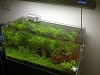
Thank you for the details Urban.
Sent from my iPhone using Tapatalk







Well, i do notice abit of mild "trickling" sounds (depending on how much Co2 bps is injected) with such reactor systems when its operating, its from the pocket of Co2 swirling around in the chamber. Not very audible if you have it installed inside a tank cabinet though.Originally Posted by milk_vanilla

Thank you for the details Urban.
Sent from my iPhone using Tapatalk
Hi no worries, co2 injection is an artform. I am learning as well.
Inspired by AmanoLimited by Yusof Ishak

 Leanring, Always Learning

The above was the initially what I was looking for, but then EOA had yet to bring this particular model in. Subsequently, I found ISTA's Max Mix (med) which intention is similar but instead of gravity pull force, it makes use of propellors:
I had since installed it inside my tank:
as it is in the tank under water, there is hardly any noise as compared when you install it outside of your tank. Mixing CO2 into water is a wonder, there is hardly any visible CO2 bubbles coming out of the mixer, you will need to observe very carefully in order to spot the mist that is coming out of the mixer.
My set-up is a little different from the rest, instead of connecting my mixer to my canister filter, I connected it to a pump, Eheim Compact 300 to be precise. I note that the required L/hour is between 360-1,000 L/hour, however I am only using a 300L/hour pump. This created a CO2 pocket at the top of the mixer if you let your CO2 (if you are running at around 3bps) run for around 6hours or more. This is due to the fact that the flowrate is not high enough to completely mix the CO2 (given the pressure of 3bps) that is at the same time flowing into the mixer. To me, the mixer had somewhat became a CO2 storage area that will mix CO2 into water (taking its own sweet time) even when my solenoid valve is turned off. Thus saving some CO2 in the event.
Cheers
eRic
Which co2 reactor can I use with eheim2211? It seems that 2211 flow rate is lower than the recommended. This is for my 30cm cube tank.. Thank you
Sent from my GT-N7105 using Tapatalk
You could still try using the ISTA turbo or mix max reactors... the main issue with using lower flow canister filters with such reactors is that the built-in impellers will spin slower and the Co2 bubbles will tend to dissolve at a slower rate too. If the bps count is too high, the Co2 being pumped into the top of the reactor might accumulate too much and create a large pocket of gas, resulting in the reactor becoming quite noisy.
I guess maybe if the Co2 injection rate is slower, it could work out to balance the slower dissolve rate. For a 1ft cube tank, maybe you can try injecting just 1/3 or 1/2 bps of Co2 to start with, then increase the bps in stages until you get the ideal bps rate.
An alternative is to use a powerhead/pump connected to the Co2 reactor submerged inside the tank, like how ConcaveLiNkiN did with his set, that will also work too (though it'll take up space inside the tank).
Co2 reactors have very high efficiency, so you actually may not need to pump in high bps to get optimal Co2 levels anyways, in my 2ft tanks i only need to run 1 bps and my drop checker already maintains a constant lime green color and the plants are pearling well.
Last edited by Urban Aquaria; 28th Nov 2013 at 02:34.
Thank you very much
Sent from my GT-N7105 using Tapatalk
Bought ista max mix from one of the member, as he dismantle his set. I set same bps output as what i had before with up inline diffuser. My observation so far my drop checker stay to green or dark green, whilst beforehand it's easy to make it lime green. Urban or other do you experience the same?
Sent from my iPhone using Tapatalk
I guess the dissolve rate depends on the flow rate, bps, tank volume etc... but in my case i stuck to the same bps and the drop checker still showed the same lime green color when lights on. You'll probably have to let it run for a few days and adjust the bps and on/off timings to get the optimal settings.
The difference in reaction time you experienced could be from the difference in how both systems work.
From my observations, in an inline ceramic diffuser, once its is switched on, within a few minutes the whole tank is full of tiny Co2 bubbles (and some of it probably swirl around the drop checker hence faster color change), then when switched off, the Co2 bubbles disappear very quickly... compare that to inline reactors which mix in Co2 in a more gradual pace, it gradually forms a pocket of Co2 at the top of the reactor and the impellers steadily chop and mix it, and even after the solenoid is off, there is usually still a pocket of Co2 still left in there which gets dissolved over time.
With that in mind, i've lately tested adjusting my solenoid to switch of 90 minutes before lights off (instead of 60 minutes), so that the residual pocket of Co2 in the reactor is fully dissolved and used up while the lights are still on, helps to reduce the overall Co2 concentration during night time.
it's been 3 days using max mix, my drop checker still stay at green, never hit lime green regardless from on to off co2 period.
Initially i decided to not playing around with my co2 timer and BPS, as i would observe for while to see the difference between this reactor and my previous diffuser.
Today i' am thinking to stick with the same timing period (1.5 hr before light on , 1 hr before light off) but with higher bps, and see how it makes the difference.
I am using the ista max mix for my low height tank. The tank has a height of 20 cm, which not only puts a constraint on what plants I put, but also what equipment I use.
Due to the height, normal ceramic diffusers are not able to work as well as the bubbles reach the surface very quickly due to the low height, thus a low dissolving rate. This is one of the main reasons that I am using the max mix.
I have no problem getting the same or better plant grow using the max mix as compared to the normal ceramic diffusers. Drop checkers are just a gauge, and not a 100% accurate instrument to indicate the dissolved co2 content in the water. It will be best if you can monitor the plant growth. I am sure that for the max mix, the water in the whole tank is evenly mixed with co2 as compared to ceramic diffusers which bubbles sometimes do not really get around the whole tank.
The drop checker indicates only the local co2 concentration. It will only be fair if you got numerous drop checkers all around to compare both items (:
Sent from my GT-N7105 using Tapatalk
Thanks for all advice guys,
Indeed drop checker is not 100% reliable or tool that we could totally rely on. Plant observation and response is the best accurate gauge. However it takes time before you realize that they are suffering from co2, and some plant can easily recovered and some you might need to prune and replants some healthy nodes, which i might not a good idea to have this circumstances.
Alternatively i measure ph drop level before co2 on and when the light on, so far i got reasonably good result, it was 1.0 level dropped. Will see how it goes next
Sent from my iPhone using Tapatalk
An update,
I finally returned back to inline atomizer, as i feel the reactor reduce the flow rate a lot that i initially could think of. I got mild GSA on glass and leaves of slow growth plant , some plants section are melted especially to some spots where it got weak flow.
Which this rarely happened before, i tried to maintain the same bubble count etc. and same ph level drop level during co2 on and lights on ( between reactor and atomizer)
I'm not giving contradiction feedback to reactor owner or those who want try reactor.
Meanwhile I'm not keen to upgrade my filter to higher rate model to compensate this.
Hope it returns to normal.
Sent from my iPhone using Tapatalk
Interesting... just curious, what was your filter flow rate and which Mix Max reactor model did you use? And did you also have any other equipment installed inline too?
I'm using eheim pro 3, that theoretically provide 1250l/h with ista max mix L size.
I think it was mistake, should use M size instead. Eheim is suffered with flow degradation a lot once we filled with media and not maintain it's cleanliness due diligently
I tried to clean the filter every month, but sometime it's dragged to 2 month.
Probably if i strike toto one day, i will come back to reactor powered by super jet
Sent from my iPhone using Tapatalk
Yeah, maybe the M-size Mix Max might have been more suitable for your setup, since the filter's listed flow rate is just slightly above the reactor recommendation... especially after flow reduction over time is factored in.
I guess for anyone looking at these reactors, the flow recommendation for the models should probably be based on actual operational flow rate, rather than listed filter flow rates.
Yeah mate, m should ideal in the very first place . That's fine, i considered my tank as a hobby, not taking any profit from it, rise and fall does not make any difference.
Recently I removed my brass bubble counter, meaning the atomizer directly attached to solenoid. I give up by keep replacing the counter, cause i found it's keep causing mild gas leak after use it some time. I tried to seal here and there to stop the leakage. In the end i feel why not taking this stuff away and directly attached.
Quite high risk for the fauna, since I might no longer able to take the bubble measurement anymore, but i still have drop checker or ph meter to monitor the drop swing level and also my fish behavior as the best indicator i have. The challenge is you might have other daily activities, so we might not able to take immediate action if something bad happen.
This is a high risk, but in other side, i'm eliminating one possibility point of common leakage, and my short observation is i don't have to open my output needle higher in order to achieve same co2 level compare to use bubble counter previously. I guess because my counter had been suffered with leakages though they are mild but still deteriorate the overall pressure.
Later,
Sent from my iPhone using Tapatalk
Hmm does anyone experiencing mild hissing sound from up aqua inline atomiser?
is this normal?
Fishy Tank Results Algae Vs Dodofish 2 : 0
which version?
version 1 never use before, so I cannot comment.
new version 2 tube I have that sound... half of that time.... is some bloody leak... the seal not so fantastic.
but but... working time should have a very soft hiss... not too obvious.
use soap water test...
Sent from GT-N7105 powered by Temasek CM11
Learning the hardway, not the highway.
Photo Blog - impervious-endeavors.blogspot.com
Semi-Active currently
"if he cant be bothered to take the time to write his question properly, why should I take the time to answer him."
I've used the 1st gen atomizer model before and i didn't notice any hissing sound, was very quiet.
An audible hissing sound might indicate a tiny slow leak somewhere in the unit, better to check with soap water test (like what felix_fx2 mentioned), or dip the whole unit into a small container of water while its operating and observe if any small bubbles emerge outside of the set.
 Posting Permissions





Bookmarks